Forest bathing (FB), also called Shinrin-Yoku (SY), is “a traditional Japanese practice of immersing oneself in nature by mindfully using all five senses.”
Known therapeutic effects are:
Immune system function (increase in natural killer cells/cancer prevention)
Cardiovascular system (hypertension/coronary artery disease)
Respiratory system (allergies and respiratory disease)
Depression and anxiety (mood disorders and stress)
Human feelings of “awe” (increase in gratitude and selflessness)
The concept of Nature Therapy (NT) is shown through the flow chart below:
Concept of nature therapy. (Yoshifumi Miyasaki)
Report says that “individuals living and interacting in green spaces (GS) report being more energetic, in good overall health and, have more of a sense of meaningful purpose in life.” The practice of installing GS in cities has “increased human health and promoted a sense of “calm” in a busy city.”
Reference
M. Hansen, Margaret & Jones, Reo & Tocchini, Kirsten. (2017). Shinrin-Yoku (Forest Bathing) and Nature Therapy: A State-of-the-Art Review. International Journal of Environmental Research and Public Health. 14. 851. 10.3390/ijerph14080851.
I cannot agree more with the statement that GS in cities promote “calm” in a busy city filled with “technostress”. In a way, GS provides a retreat from the bustling city. I tend to make visits to the downtown harbour area for a walk after a busy day. Places I visit in central city overall lacks green, apart from the Albert Park or the Victoria Park area, but the harbour in a way provides an element of nature. I can perhaps bring in this experience in not only the forest bathing experience but also the bathhouse design.
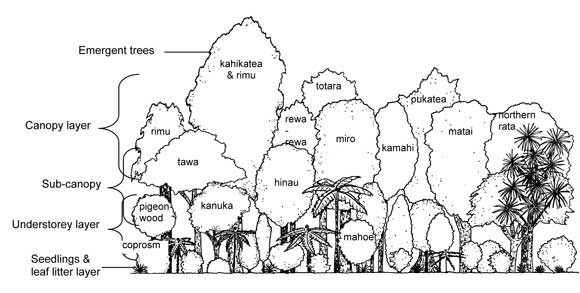
Forests in New Zealand are typically made up of either mixtures or pure stands of broadleaved, conifer and beech species. The two most common forest types are conifer-broadleaved forest and beech (Nothofagus) forest.
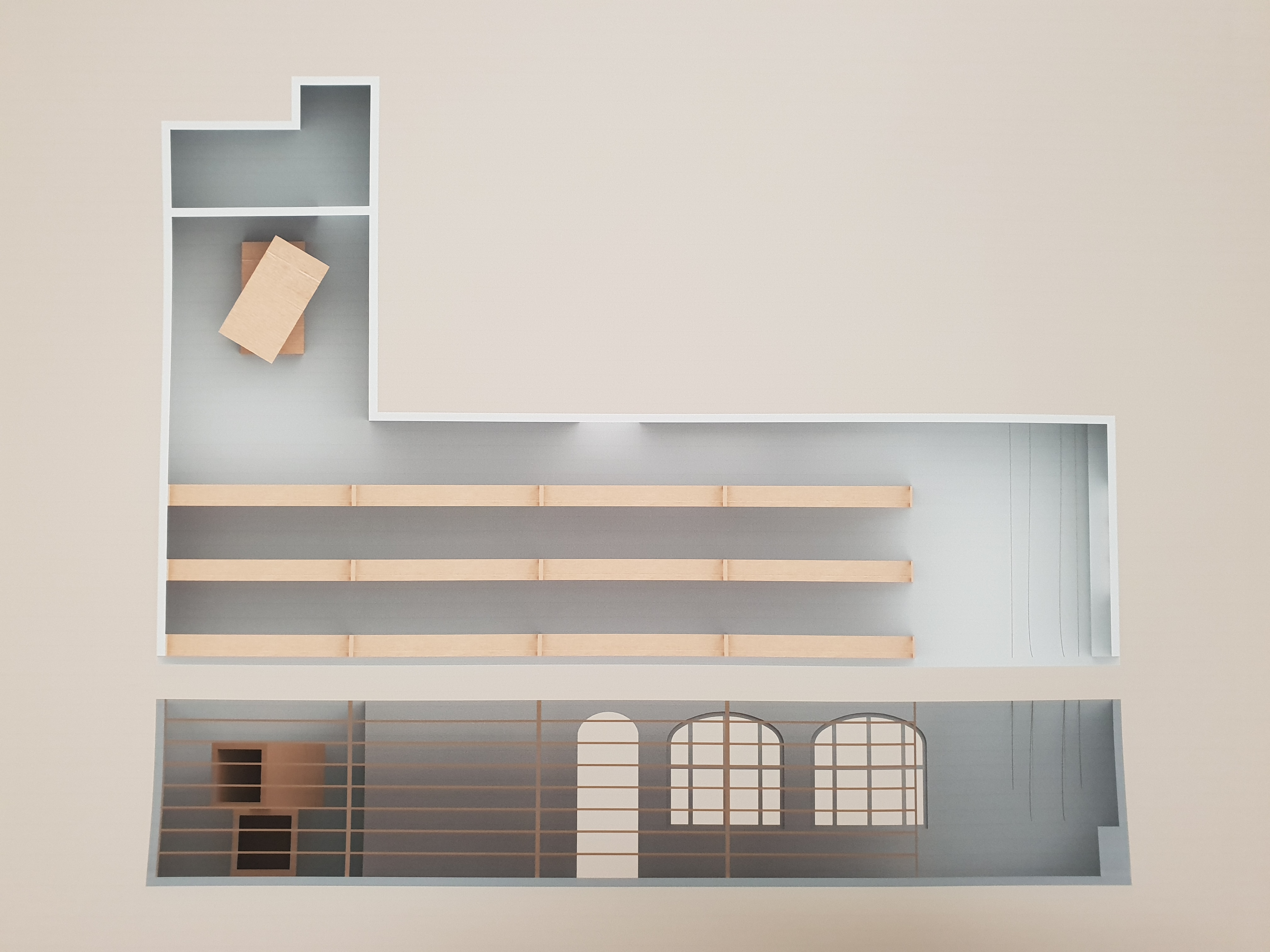
For Project 3: SLEEP/WAKE: TWO STRANGERS, I invite two travellers to the gallery space to stay a few nights. The invited travellers are to bring in a book of their choice and a photo they have taken to the gallery. The gallery is filled with shelves and strings, which overtime will be filled with books and photos brought in by the travellers, slowing converging into a more private space from a rather public space. The travellers are advised to share their reading selection and the story behind the photo they have taken during their stay. This idea originated from the thought that dream, during the sleep stage, not only is inspired from randomness and imagination, but also from experiences gained while an individual is awake. The idea is to invite travellers and hope their travel continues even in their dream state, from the experience and connection they have newly built at the gallery.
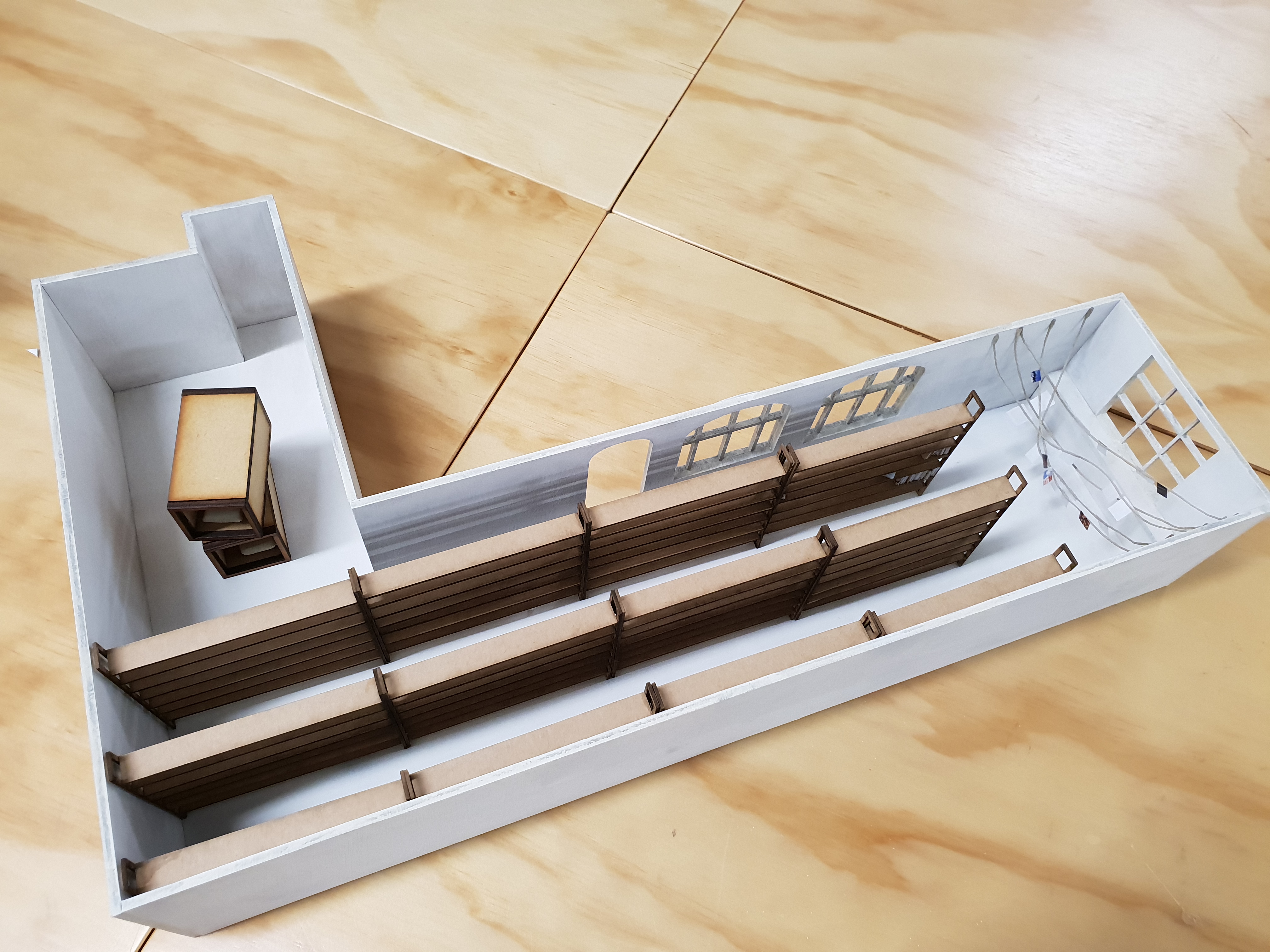
I did some experiment with the layout of the shelves in the gallery. I went with the later option because I thought that increased the sense of privacy inside the gallery space as the shelves will later become tall walls of books and it would be difficult for individuals to see through what is behind the shelves from the outside of the gallery. Even from the inside, the visitors would have to travel narrow hallway of books to full explore what is inside the gallery, creating potential adventures inside the gallery space.
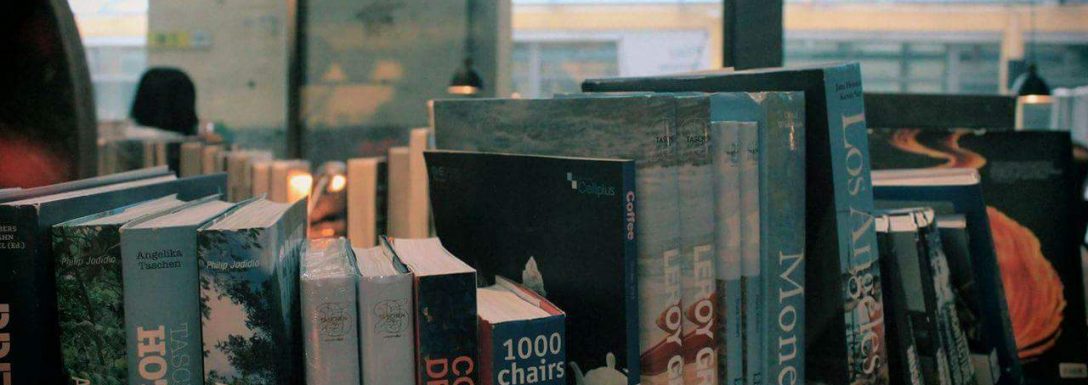
Just to give some ideas about how the shelves will be filled, I created several books to fit the shelf.
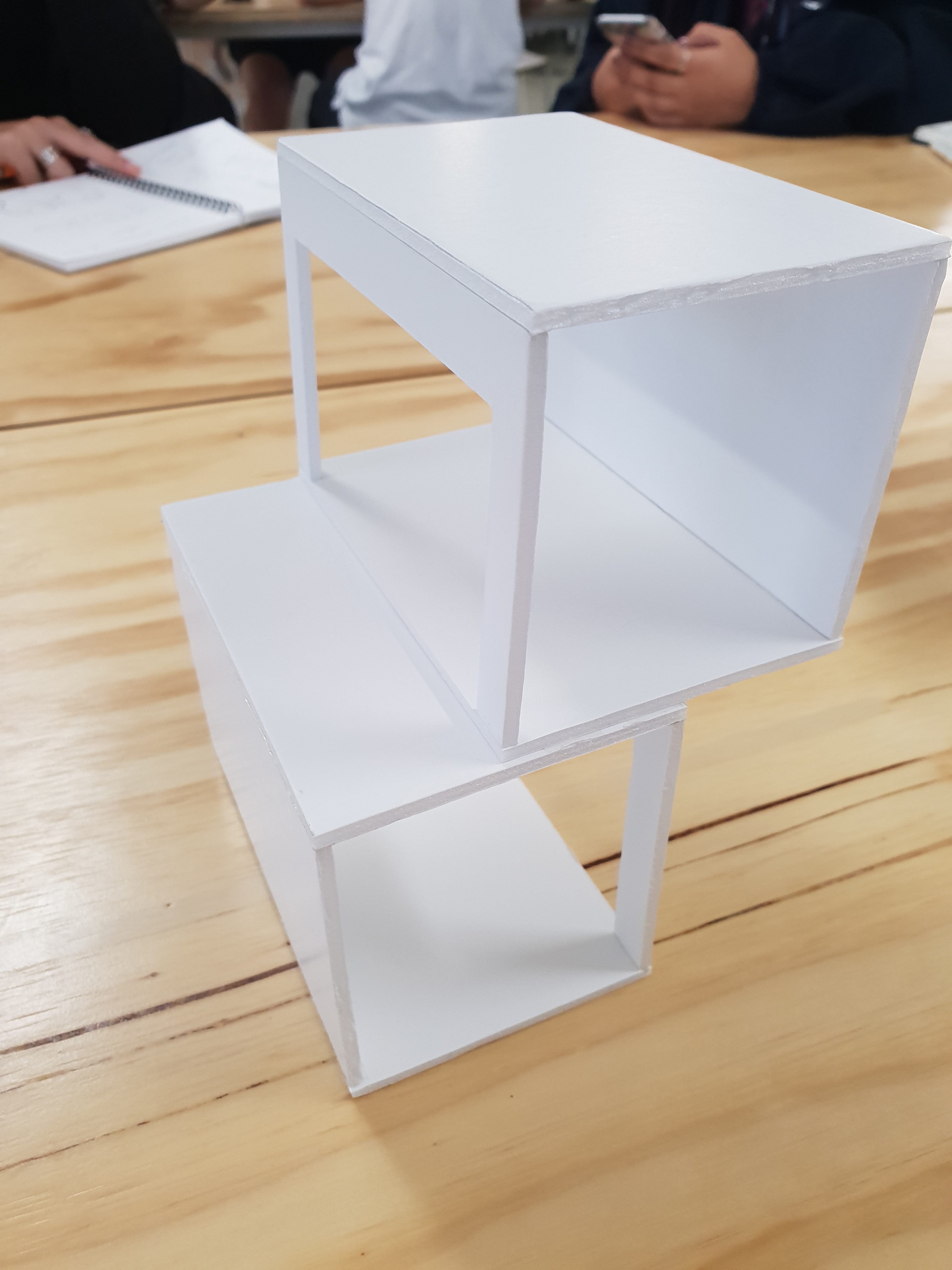
The sleeping platform is designed
so that the travellers have the freedom to rotate the top part of the sleeping platform,
altering the position of the entrance of the platform. As the sleeping platform
rotates and the entrances face the opposite side, such interaction with the
platform suggests separation between two strangers. To what extent they interact
during their stay is determined by the strangers, not only during the time they
explore the space but also when they are asleep.
The platform is designed so that it is quite isolated from the rest of the gallery. Most of its walls are blocked, except for a single entrance. In that the rest of the gallery space is public, I wanted the strangers to have an option of privacy as well.
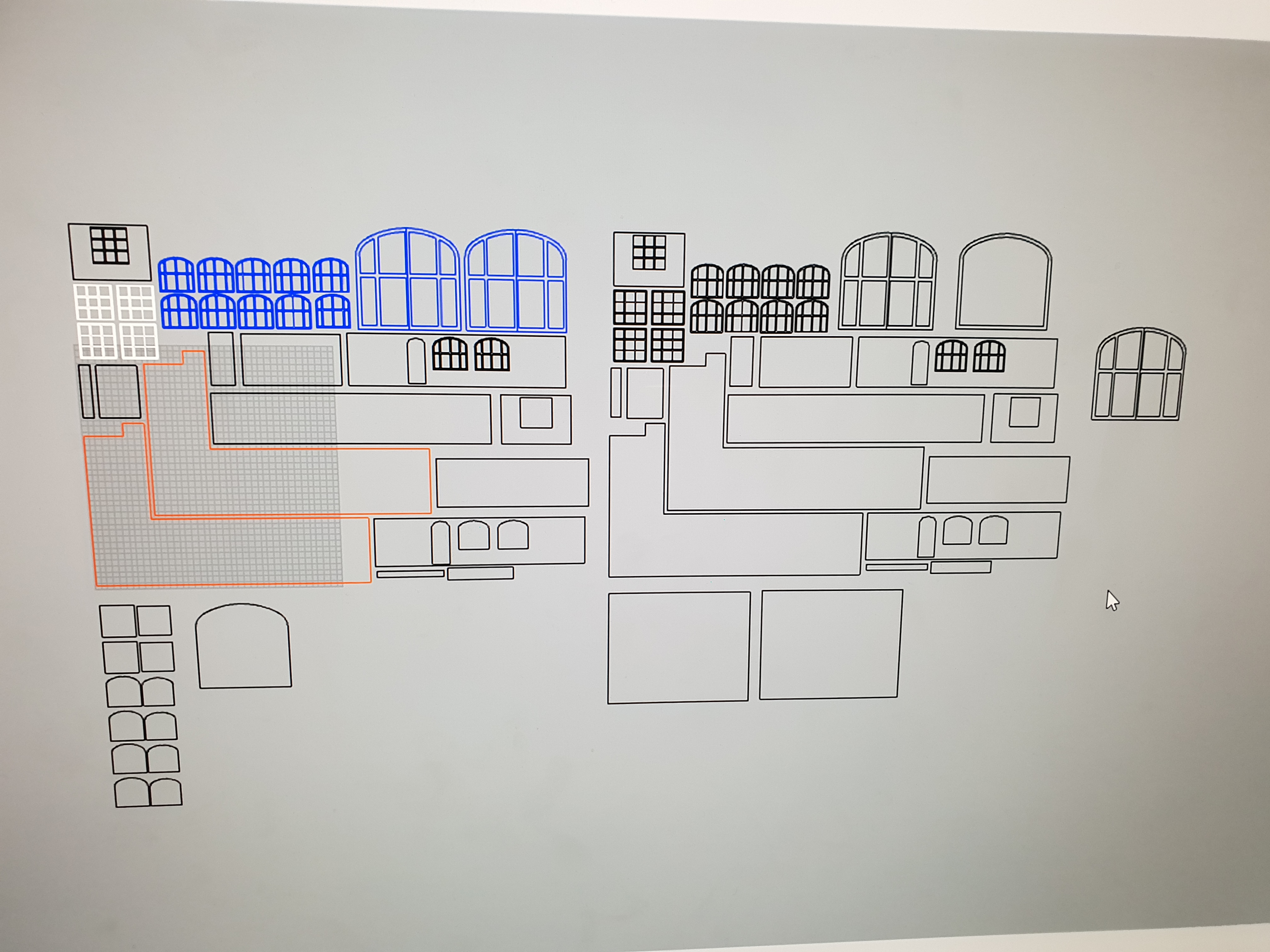
I decided to rebuild the gallery using the laser cutter. I first generated a file of the parts using Rhinoceros 3D with the measurements of the gallery taken earlier in Project 2.
Using the laser cutter to cut MDF
I decided to use 3mm MDF for the base of the gallery and 1mm card for the shelves. The challenge was painting the MDF board. I have tried different method of brush painting, using a roller and spray painting but none of them worked to satisfaction. I tried using a gesso layer as well as using a primer spray to create a surface ideal for painting but the spray was not applying very well so I ended up using the traditional brush painting method which left a lot of brush marks. This would be something I can further improve on when I build my next model.
Base and shelves assembled. Part of the walls and the floor painted and the rest of the walls yet to be painted white.View inside from the main window.
While exploring the idea of having two strangers in the gallery, I thought it would be a good idea to create an atmosphere for the gallery space first before finalizing the design of the sleeping platfrom. Thus ideas for the gallery space were generated in an attempt to explore the idea of SLEEP/WAKE. I first wanted the gallery space to be otherworldly, like that of the dream so it looks obscure from the outside. I wanted the dream platform to be the only thing that makes sense in the gallery space, so that within the uncertainty, the strangers seek for something familiar (through the act of sleeping). Thus making the transition between sleep and wake unclear. My initial aim was to breakdown the boundary between sleep and wake, they I thought they are inseparate.
After a series of ideas, I decided to go back to my previous projects and the idea of inviting two strangers to the gallery space. My first project focused on dream and certainty through light and dark. My main point was that the two states, sleep and wake, is somewhat linked and are not totally isolated, as dream is a compilation of experiences. The second project focused on openness and obscurity mainly through flora. The key point was that boundary between private space and public space is unclear.
I want to bring in elements from both projects into my third, somewhat applying those ideas with the concept of having two strangers in the gallery. So, what do I want the strangers to experience during their stay?
I want the strangers to be travellers, as I enjoy travelling myself. I believe where you stay during your trip takes up a huge part of your journey, as it is often the first thing you do after you book up your flight. You want your travel experience to be unique, while being able to enjoy what the travel destination offers. If you are travelling by yourself, that often means you have a great chance of meeting new people, as you decide to stay at backpackers or other accomodations with shared sleeping space.
I want the travellers to be able to freely interact, or create a space that encourages them to interact. At the same time, I want the travellers to still have the option of privacy as well, as I want the interaction to be their decision, not a forced one. How can I encourage interaction between two strangers? What do they have in common? What medium can I incorporate?
The obvious connection between the strangers, being travellers, would probably be that they enjoy travelling. Often I find that travellers are excellent photographers, as they frequently record their journey. Photos are also a great way to let individuals indirectly travel places they have not been before, which I thought was a great way of encouraging the strangers to interact.
Then I thought of Photo Laundry, an outdoor photoexhibition, that I have attended earlier last year. Photo Laundry encourages anyone, who has interest in photography, to bring in their photos and in turn take photos of others they like. I thought this was an excellent system for travellers to share their travel photos, as well as having something physical to keep so the experience at the gallery remains in their mind for a long time.
Some of the photos I brought from the Photo Laundry event had short stories written at the back of the photos. So I extended to medium from photos to having books in the gallery space as well. If the travellers each bring in a book and/or a photo into the space, the space over time will gradually fill up with stories.
Having books in the gallery was also inspired by the Ark Booktower introduced in the book Small Architecture, by Philip Jodidio. I aim to make shelves as tall as the height of the gallery space so that once the shelves are filled with books, the gallery space slowly converges from a more public looking space to a private looking space, as well as having more stories told.
For Project 3: SLEEP/WAKE: TWO STRANGERS, we are to design a space for two strangers to stay a night. The project started off with exploring possible sleeping platform for two strangers.
Sketch of possible sleeping platforms
From the sketches made, a quick model was made based on the sketch. I wanted to focus on the level of interaction between strangers, as I think sleep is very much a private act. It would be interesting to have a platform where the level of privacy, or interaction between the strangers can be altered.
The first platform generated was a bed that shares a single headboard. By placing two beds close together, the intimacy between strangers are increased. However, with the presence of a single headboard, there is still some level of privacy between the strangers as they are not able to see each other while on the platform.
Draft 1:20 Model of the sleeping platform
The next sleeping platform made was inspired by my trip earlier to Tokyo, while staying at an accomodation with multiple capsules in the room. I opened up the side of the platform so that the openess of the platform can be determined by the curtains that can potentially be hung on the sides.
From here, I think the priority would be to come up with a situation for the two strangers and design the gallery space accordingly while applying the idea of sleep/wake. Instead of using same ideas from Project 2, I plan to bring in some elements but make major changes to how the intervention is placed to the gallery.
For the model, I have been considering 5mm foam board to create the base. However, when started cutting the base out of 5mm foam board, I have found out that not only it is difficult to make precise cuts on a foam board with such thickness but also to get a clean cut. So instead of using 5mm foam board, I have reduced the thickness of the foam board to 3mm and decided to use thin wood sheets to add thickness. The options were basswood and balsa wood. I have chosen basswood because it was relatively firmer compared to balsa wood. While cutting the basswood I have decided that basswood was not appropriate for delicate cuts such as windows because not only the cuts have to be one directional but also it was quite difficult to cut (which I will take into account when I make my next model). Instead of making holes for the window on basswood, I have decided to make the cut out on the foam board instead and make basswood frames.
Once the pillars on the side were added, the model was painted white using gesso. The overall model is built white because I thought white is a colour that holds duality – as much as it is pure, it also explicitly emphasizes anything that is not its own and is very susceptible to change, so the space lies between connection and detachment.
The leaves were made out of butter paper and were individually handcrafted. They are concentrated near the entrance of the model as I wanted to show a gradual change from the outside space to the inside.
I was sitting by Chancery square until I saw the shadow of the tree being cast on the floor infront of me. While thinking about factors that link the internal space and the external space together, I thought tree was a good medium that connects the inside and the outside. In an interior space, people tend to grow plants as a refreshment, because plants serve as evidence of nature, in the middle of an interior space that is filled with man-made objects. In an exterior space, often trees give the adverse effect. Being surrounded by trees in places like the forest, individuals may feel like they are in a private space despite them being in an opened public space.
With such idea in mind, I created the first draft of my threshold drawing. The key idea in the drawing was light and dark and flora. The intensity of the shadow was shaded in depending on the area of the gallery, with the shadow of the window frame also being illustrated. Branch like white streaks were made in order to represent branches of trees but I thought the drawing did not portray the relationship between the flora and light and dark.
So a second drawing of the threshold was made. I wanted to represent the immediate reaction that I got when I entered the gallery. The northern side of the gallery, with a central window, had natural light coming in. The light faded while running across the gallery. I decided to leave the rooms as part of the obscurity. They are not visible unless one enters the dark corridor, which I thought links to the uncertainty of dreams in terms of sleep/wake. I used flora as a medium to represent light and dark. The flora is concentrated on the southern side where the gallery is dark compared to the northern side where it is sparsely placed.
In terms of interventions, I did not make a lot of changes in the gallery space. I have removed the fake wall in the middle of the gallery to allow the natural light from the northern side to fully run across the gallery. I have also created an extra window near the northern window to increase natural light coming into the gallery. I did not want to open up all the existing hidden windows of the gallery to not only control light flow but also to add on to the idea of privacy and obscurity. The threshold moment I wanted to focus on is the left turn once one enters the gallery walking towards the northern window. I wanted to replicate the feeling I got from walking through Albert Park towards the fountain, where I felt like I was in a private space despite being in a opened space. Thus I have placed pillars leading to the window to create the same chamber-like look the park has.










 DESIGN BLOG