Project 1: Generating an A2 Drawing

Week 1 Sat-Sun 02-03/03/19

There is a rectangle in the middle of the drawing drawn as a single line which represents the bed: a personal space where I would feel safe going to sleep and where most of my dreams are generated. Squares and rectangles are randomly placed across the page as portrayals of different dreams. Part of the shapes that are inside the central rectangle are coloured black, in that dreams are more common during the night rather than during the day. These depict the dreams that are actually visualized during sleep.
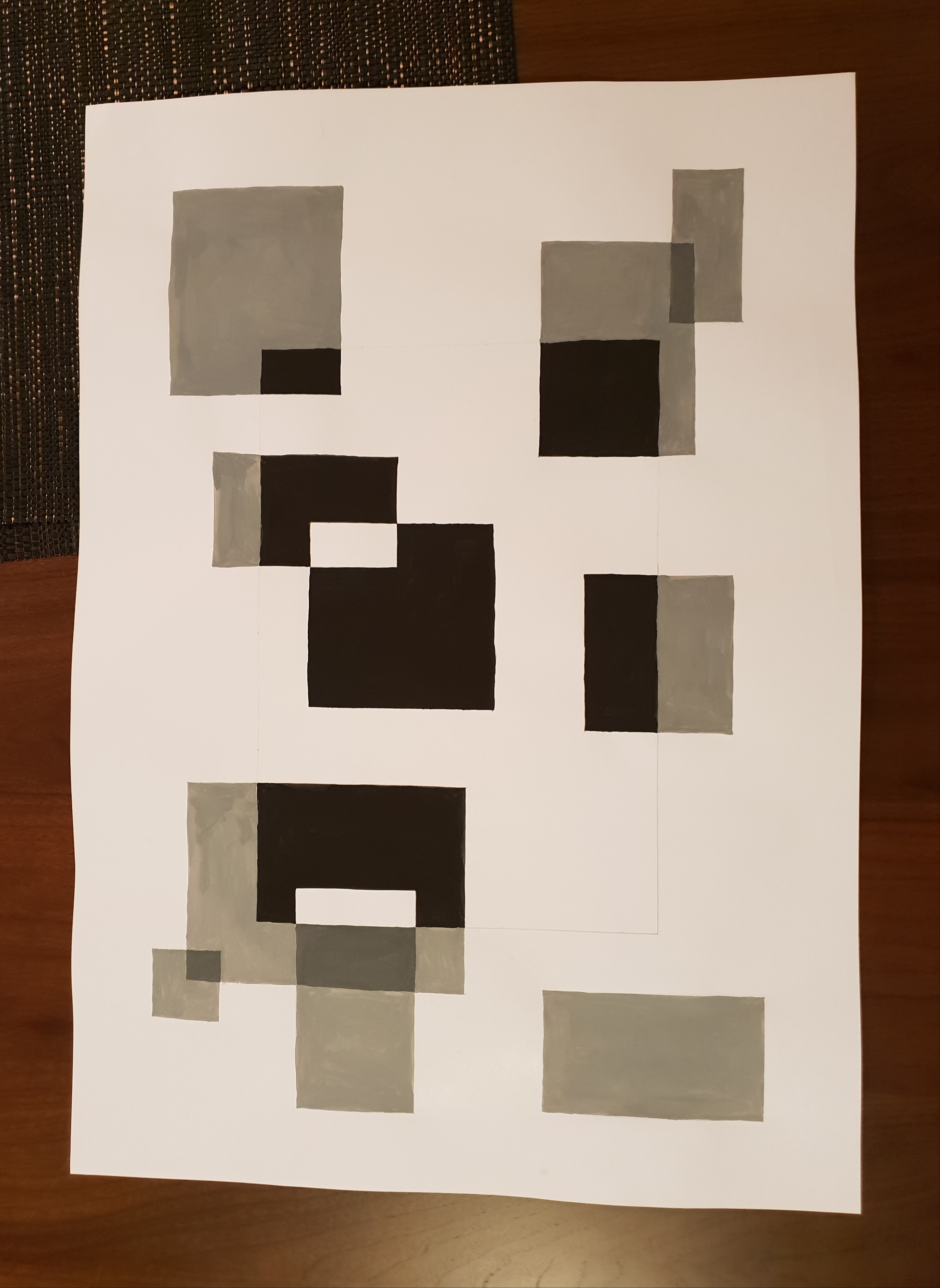
Image 1: Base of an A2 drawing done with water colour and colouring pencil

(Image 1) The background was left white in order to emphasize the contrast between light and dark. Furthermore, the parts that are outside the central rectangle are coloured grey. The grey segments of the dream are potential dreams – those that are not yet visualized during sleep but influenced by reality and will potentially be displayed in the future. The parts where the dreams intersect are coloured with a darker shade of grey in that dreams are not separate matters but all products from reality and imagination.
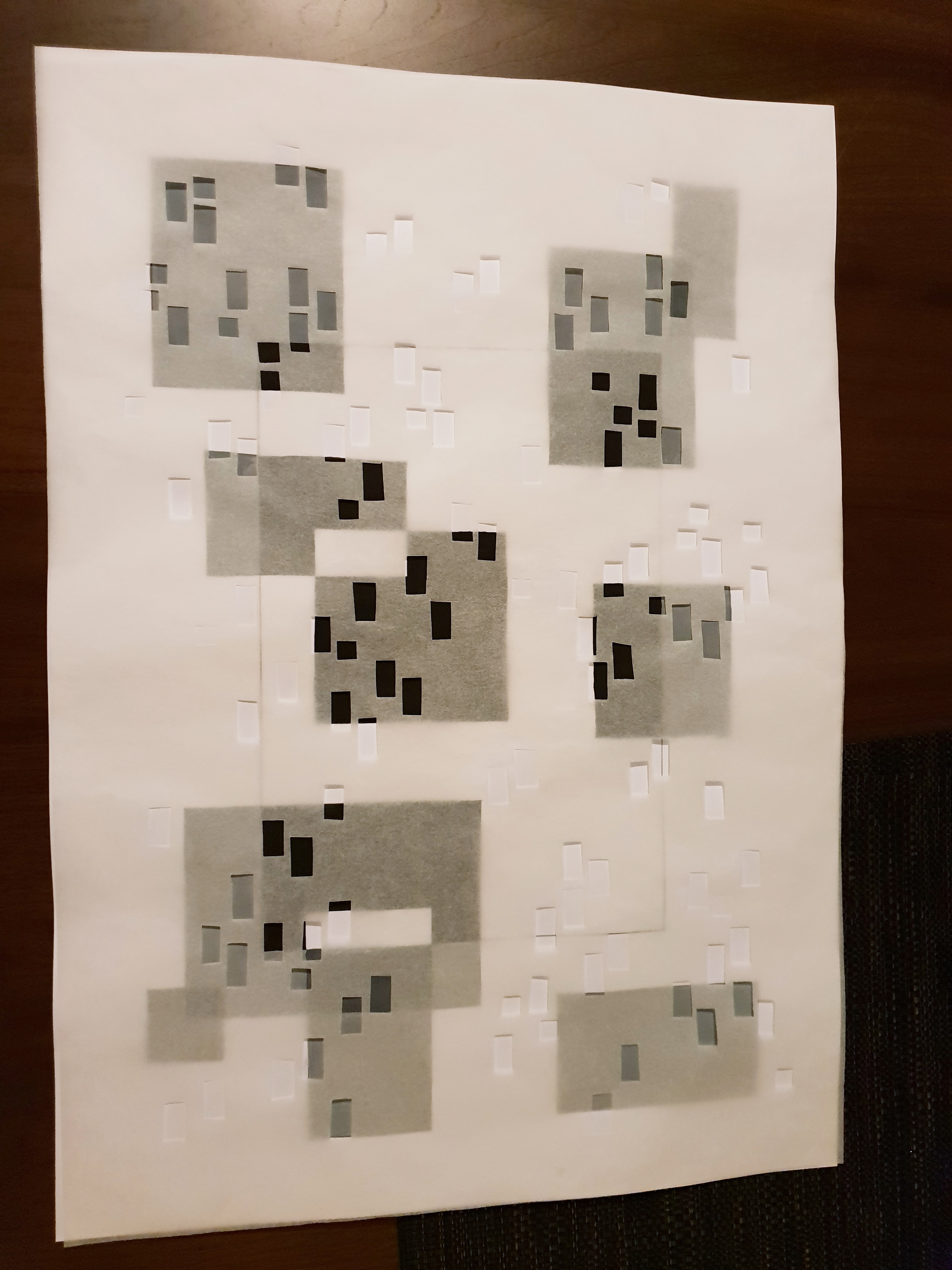
Image 2: Cut out made on butter paper overlying on the base painting

(Image 2) In order to further amplify the concept of dreams and the influence reality has on dreams, I made a cut out on an A2 butter paper of multiple squares and rectangle positioned randomly across the page. With the shadows generated under the light, the drawing serves as an interactive piece where the shadows change in shape and position as one alters the elevation of the butter paper. The addition of the butter paper not only shows dreams displayed during the night (squares among the shadow) but also emphasizes the importance of reality in order for the dreams to be generated (the shadow will not be present under the absence of light).
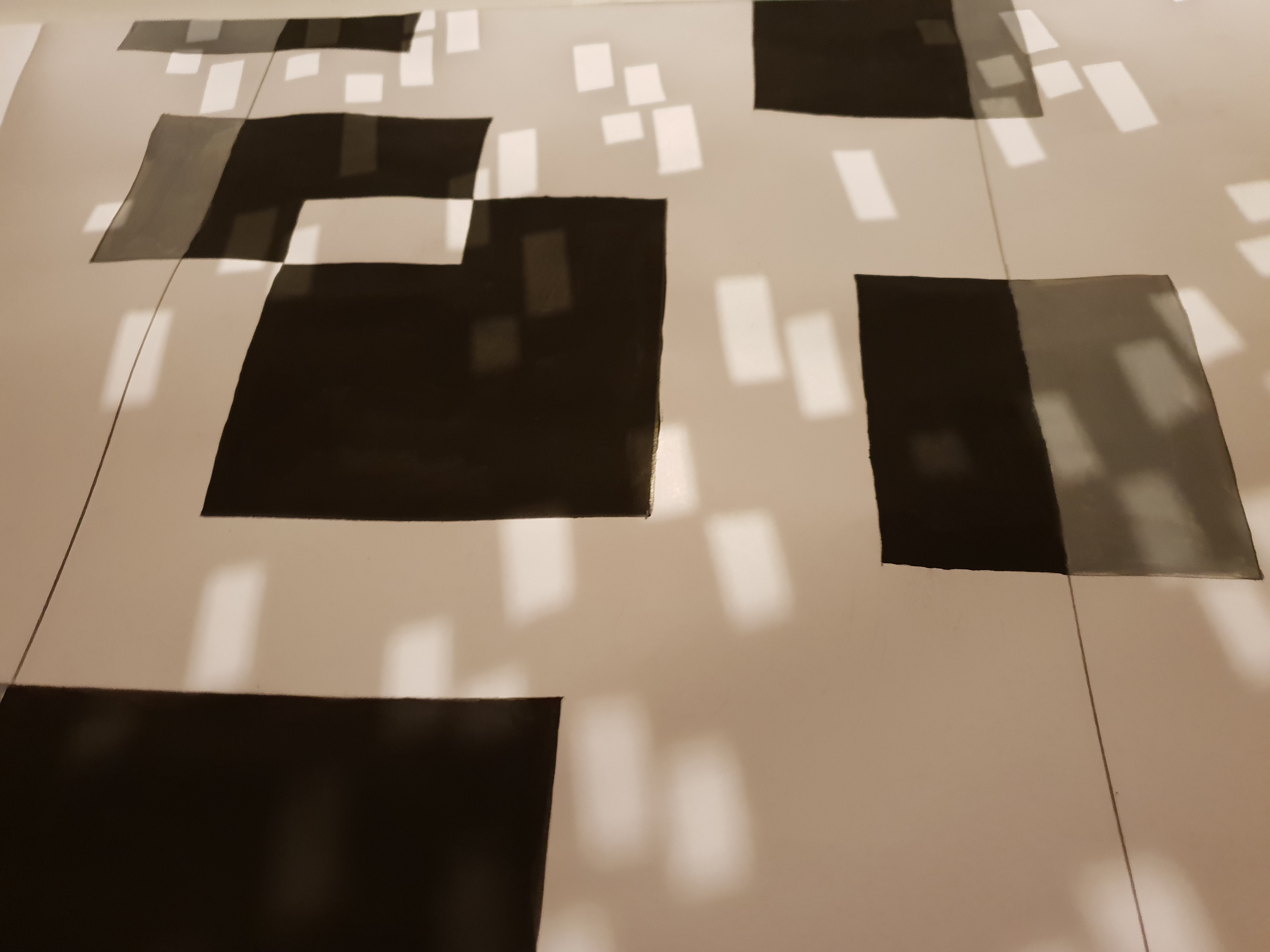
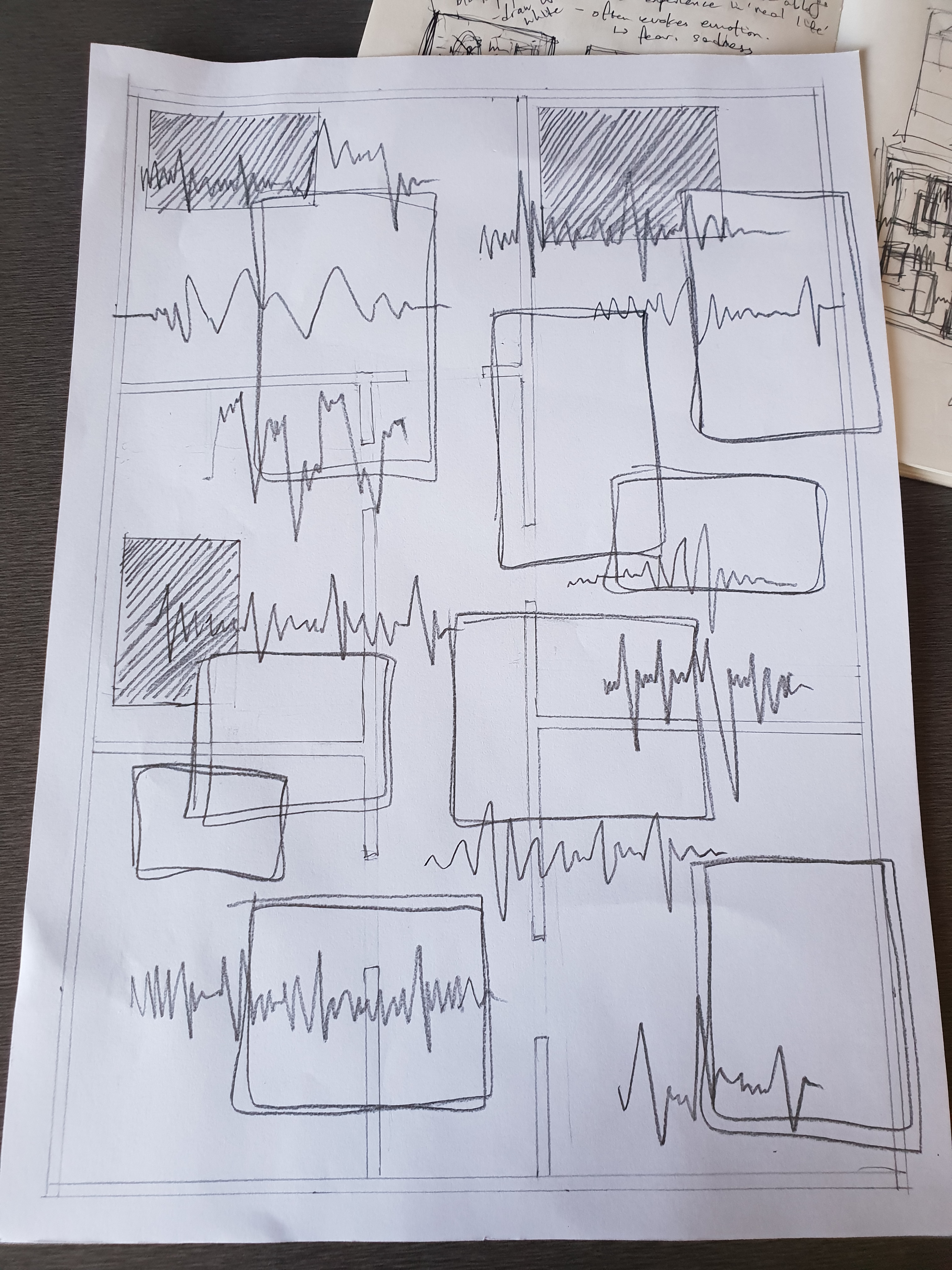
Image 3: Shadows cast when butter paper is elevated

Project 1: Developing Drawing Ideas

Week 1 Wed 27/02/19

Bureau Alexander Brodsky’s architecture inspired me to use square shapes instead of circles to represent dreams. The doors placed on the peripheries of the building provokes a lot of questions. Where are the doors leading to? What’s behind the door? Do all doors lead to a different room? What’s in the center? Despite the doors being opened in the reference picture (refer to post Exploring Concepts) exposing a single column in the middle of the structure, doors of different shape, size and colour made me imagine a space with multiple closed doors. Applying that to the concept of dreams, the square/rectangular shapes I used serve as an entrance to different dreams.

Draft 1: Home and dream

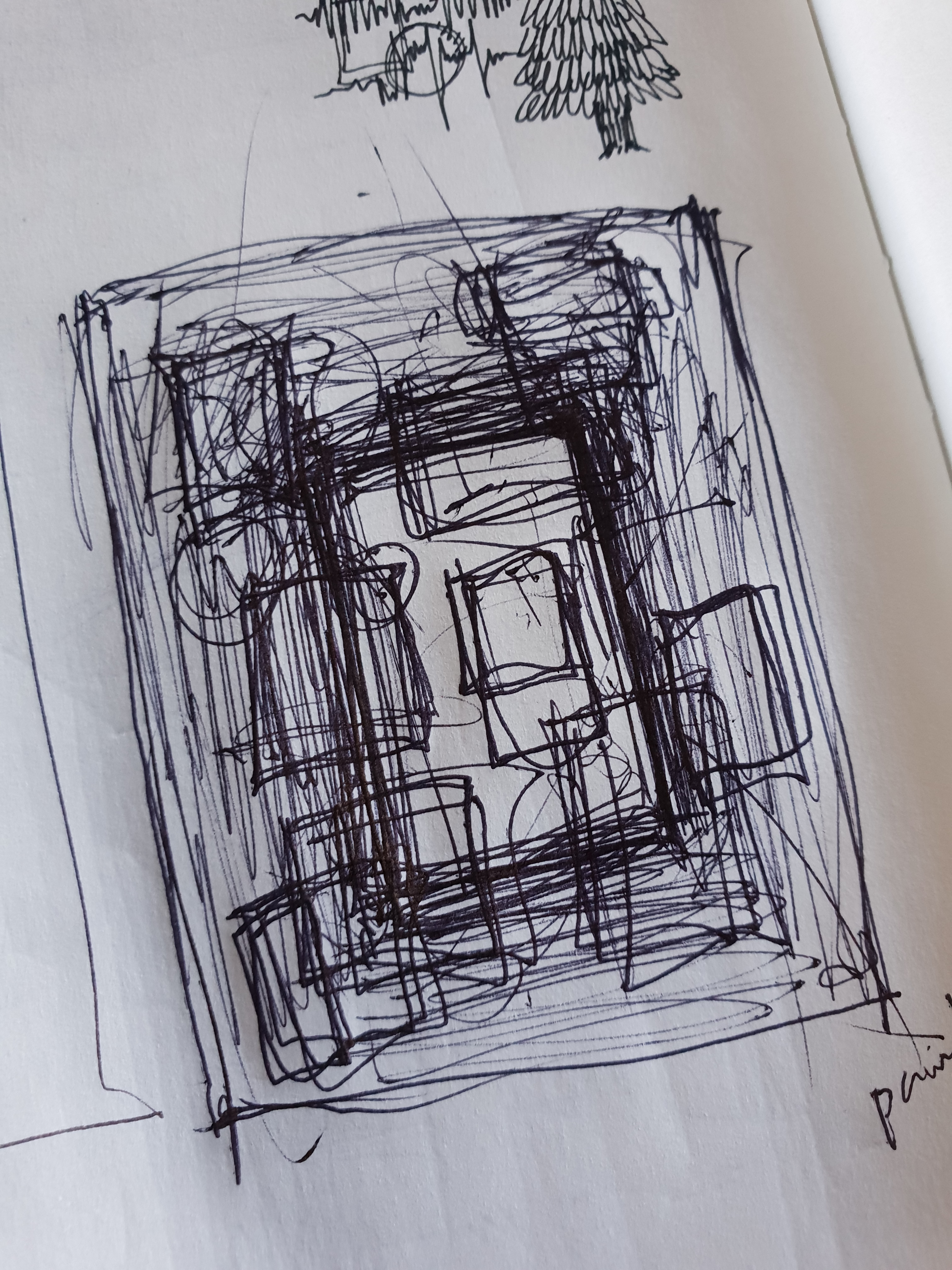
The first draft I did uses brainwaves to signify sleeping, a base drawing of the structure of my house as an idea of personal space, empty squares to explore dreams and dark squares to represent where the beds are placed in the house. In terms of privacy, I think dreams are more often generated during uninterrupted sleep during the night when I’m in my personal space.

However, I thought this draft lacked depth in terms of exploring the concept of dream. Instead of placing a focus on personal space, I decided to shift my focus to light and dark. I got an idea to have a thinner layer on top of my drawing that passes light through, inspired from the works of Petra Blaisse. The curtain-like cover not only adds a sense of privacy but also curiosity as you start questioning what is behind the cover. With such development, Draft 2 was generated which became the basis of my painting.

Draft 2: Light and dream

Project 1: Exploring Concepts

Week 1 Tues 26/02/19

From the list of given concepts, three where chosen: light/dark, dream/certainty, interior/exterior. I mainly want to explore the theme of dream/certainty as I am intrigued by the nature of dream: a visualization/introduction of one’s subconscious mind. In that dreams often interfere among themselves, they also have the potential to interfere with the life of an individual. They are commonly described as being random but I think their randomness creates a rather interesting connection with one another as we tend to seek answers for the unknown and connect up the fragments dreams leave behind. I am hoping to further this idea by incorporating the other concepts chosen into my drawing.

IDEA 1: Stages of dream

  • Possible pattern: brainwaves to represent sleep, squares and circles to represent reality and dream.
  • Exploring how each stage interferes with another.
  • Qualities of dream: creative & imaginative – allows you to explore things you might not be able to experience in real life.
  • Often evokes emotion such as excitement, fear, sadness
  • Innermost state = nostalgic, sense of belonging. Almost connecting back to reality. (Idea based on personal experience)
  • Perhaps drawing of the different part of the house – getting deeper and more private as the dream progresses.

I have also chosen below works by different artists as a reference to further develop my ideas.


Petra Blaisse, Inside Outside, Dutch Pavilion at the 13th International Architecture Exhibition in Venice 2012. (2016). Retrieved from https://www.bmiaa.com/man-transforms-the-documents-hans-hollein-in-the-new-space-created-by-petra-blaisse/7fb2712d6540df31e70731d7b06a86ef/
Palmin, Y. (2009). Rotunda by Alexander Brodsky. Retrieved from https://www.flickr.com/photos/ypalmin/3889921597

Project 1: Concept of Sleep/Wake

Week 1 Mon 25/02/19

Concept of sleep/wake, transitioning from rest to everyday life, was explored.

Idea of:

  • Intimacy – Sense of privacy, separation and isolation regardless of the number of people in the space. E.g. sleeping in a bus packed with people / sleeping in the bedroom by oneself.
  • Vulnerability – The act of sleeping usually happens under trust in that one is in an unconscious state while being asleep.
  • Threshold in waking – Register waking by sound, sensation, temperature etc.

Four sketches were made using pencil representing four concepts. From top to bottom being light/dark, opening/closure, movement/stasis and horizontal/vertical respectively.

After the sketches were made, I have realized that I have heavily used transition, patterns and shapes in my sketches. The shapes were mainly used to depict the dream state and the wake state – dream being the first thing that comes to mind when the act of sleeping is discussed. In that dreams are often fragmented and are lost easily, dreams are represented as circles that loses shapes and disappears in the wake stage (opening/closure sketch). The dreams that remains in the wake stage are emphasized in the sketch almost like an explosion. Squares were used to represent the screen of a mobile device, which serves as a connection to reality.

Posted in SFS